World and Biomes

Procedural terrain, caves, ruins, microdungeons, biomes, and vertical exploration.

Lush Starting Biome

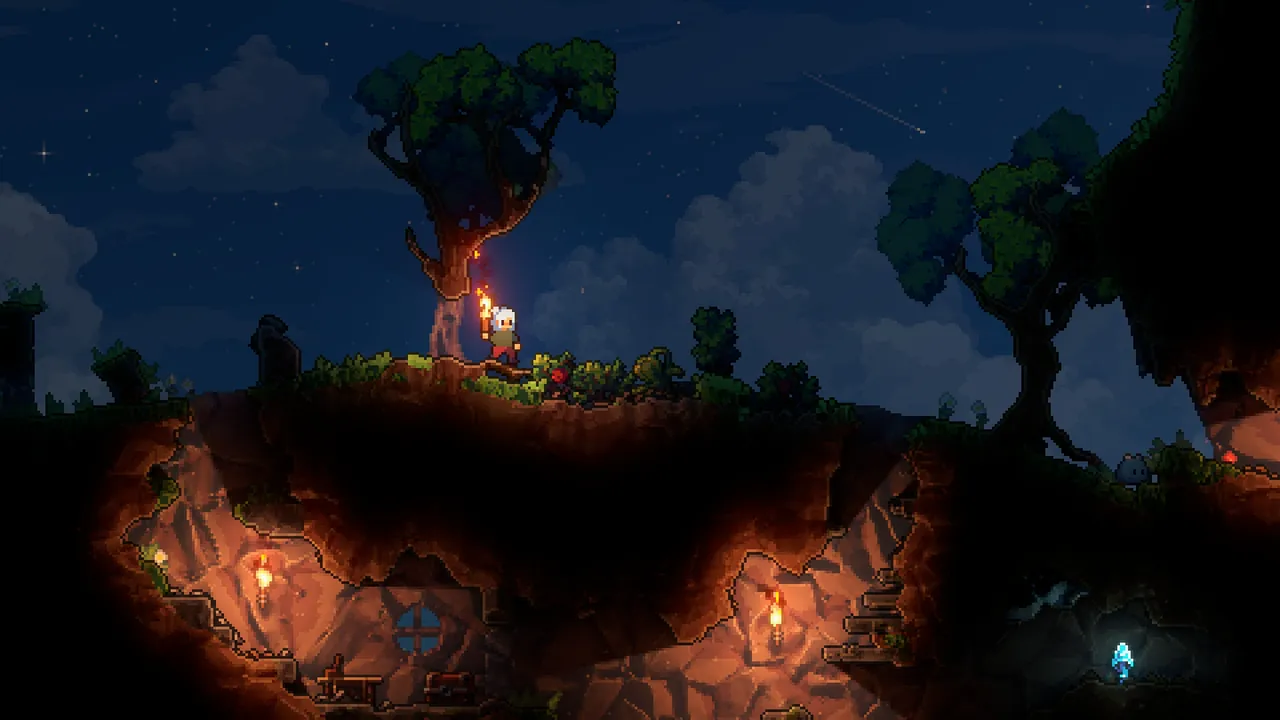
KYORA's first biome is a cozy, bright testing ground of lush grass, rolling hills, broad skies, ruins, caves, and early-game resources.

All details, sources, and relationships
Role
First biome and development test bed
Tone
Cozy, bright, lush

Environment identity

The first biome is designed to feel welcoming, with thick grass, rolling hills, bright colors, and large soft clouds. Pugstorm has cited Studio Ghibli-like cloud shapes as visual inspiration.

Gameplay role

This region has been the team's main testing ground for movement, terraforming, gear, resources, enemies, dungeons, building, and onboarding. It establishes the baseline before later biomes become more intense.

A biome built for onboarding

Pugstorm uses the lush region to test how a new player reads terrain, discovers routes, gathers early resources, encounters enemies, enters caves and microdungeons, and starts building. Its brighter and calmer visual direction supports that opening role before later biomes introduce stronger contrasts and challenges.
Related records

Official sources

Forest-cloaked Ruins

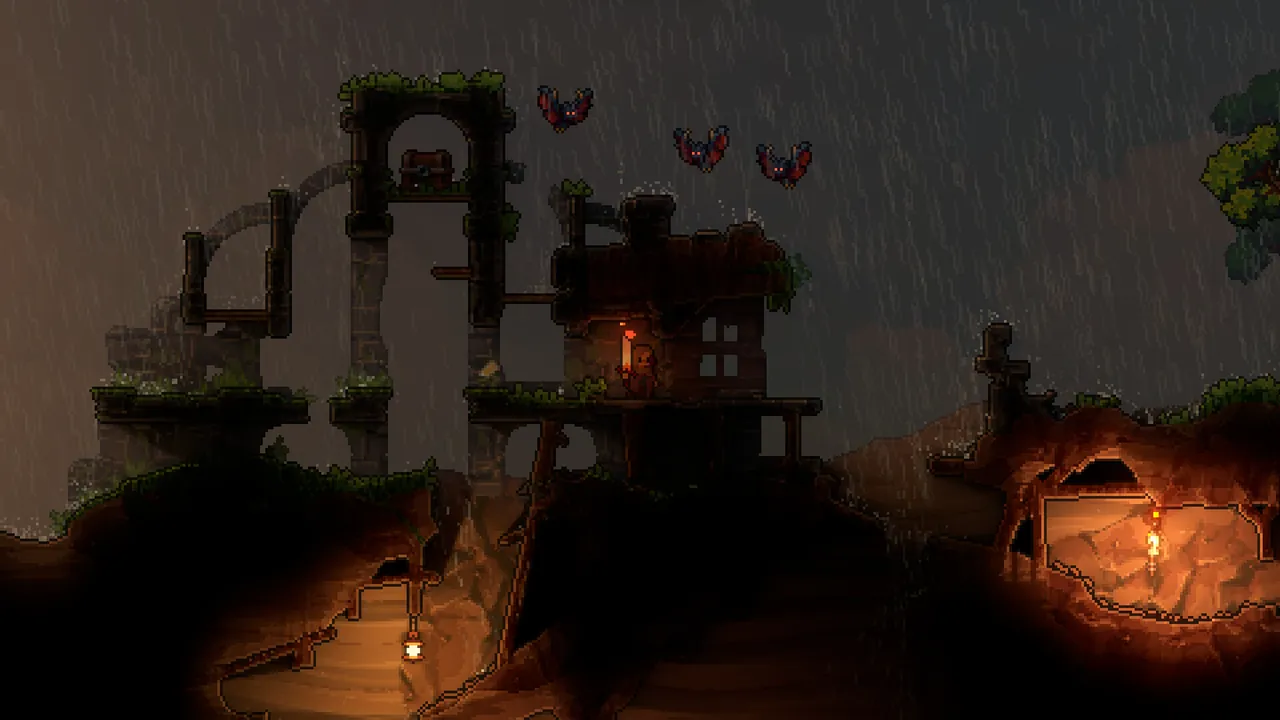
Ancient ruins covered by forest growth are one of the exploration settings named in KYORA's official reveal.

All details, sources, and relationships
Type
Ruins and point of interest
Biome
Forest setting

Forest ruins

Chucklefish describes forest-cloaked ruins among the places players will explore. Trailers and screenshots show stone structures, overgrowth, bridges, archways, and buried spaces integrated into destructible terrain.

Connection to world generation

The world-generation posts describe points of interest and microdungeons as authored structures placed within procedural terrain.

Ruins inside mutable terrain

The visible stonework is embedded in the same pixel-scale landscape players can mine, carry, and rebuild. That lets an authored ruin provide a recognizable shape while the surrounding earth, caves, approaches, and constructed routes remain part of KYORA's destructible sandbox.

Related records

Official sources

Desert Biome

Official KYORA media includes a desert environment with sand, stone ruins, dry vegetation, caves, and underground routes.

All details, sources, and relationships
Environment
Desert sands

Desert environment

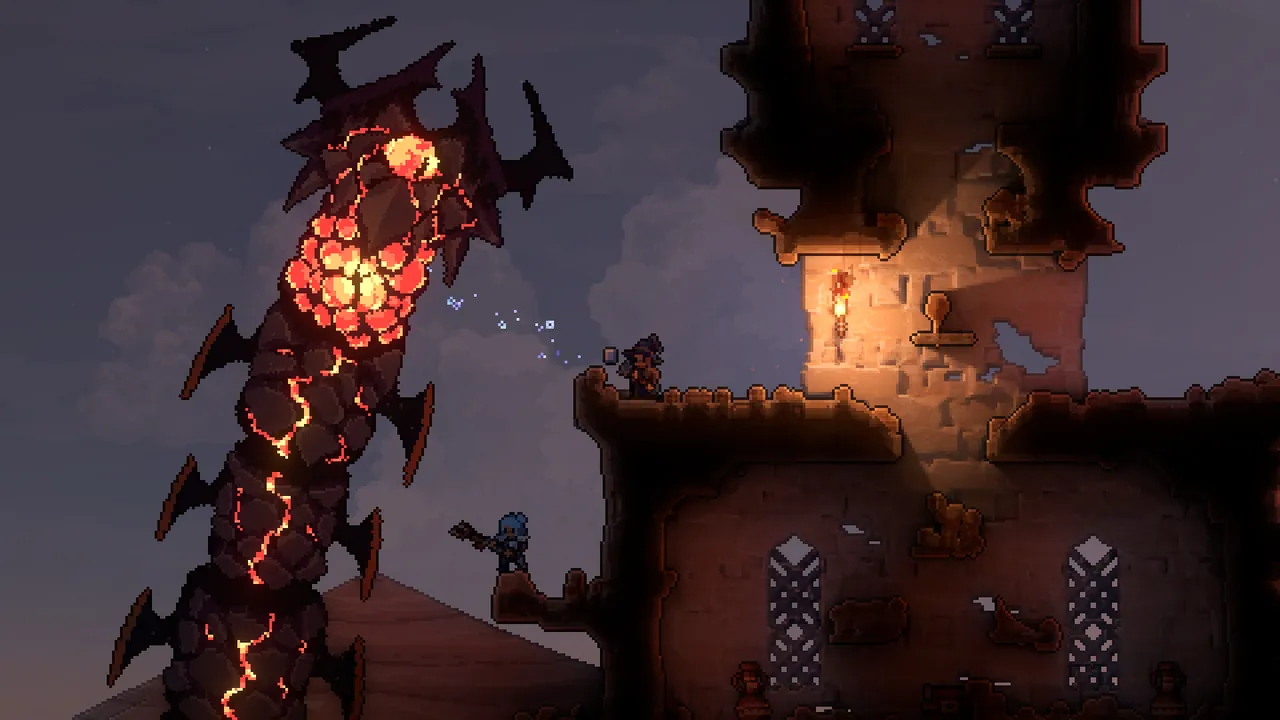
The reveal names desert sands as part of KYORA's procedurally generated world. Desert scenes shown publicly use dry terrain, exposed rock, ruins, and strong color contrast from the lush starting region.

biome structure

Official progression plans connect biomes in general with resources, enemies, equipment choices, and Herald bosses. No source assigns a named resource, enemy, equipment set, or Herald to the desert footage.

Contrast between biomes

The desert footage establishes a markedly different environment from the bright grass, broad clouds, and forest growth of the starting region. Sand, exposed stone, buried routes, and ruined architecture show how procedural terrain and authored structures can retain a distinct identity from one biome to another.

Related records

Official sources

Caves

Procedural caves add underground resources, darkness, platforming, hazards, creatures, and alternate routes through destructible terrain.

All details, sources, and relationships
Generation
Procedural
Challenges
Darkness, vertical travel, hazards
Light tools
Torch and lantern shown

Underground generation

Cave networks are part of procedural generation and are shaped with terrain, open pockets, vertical paths, greenery, resources, creatures, and authored scenes.

Exploration tools

A wearable lantern is specifically intended for dark spaces, and a placeable Torch has appeared in official alpha footage. Ropes, digging, platforming, and terrain placement can all support cave travel.

Vertical cave exploration

Pugstorm's world-generation examples treat caves as layered spaces rather than flat tunnels. Open chambers, drops, narrow passages, resources, creatures, greenery, and inserted landmarks can be connected through digging, built platforms, placed terrain, ropes, and light, using the same sandbox tools available above ground.

Related records

Official sources

Skull Cave

Skull Cave is an authored cave scene used by Pugstorm to explain how memorable structures are placed into procedural terrain.

All details, sources, and relationships
Type
Authored cave scene
World role
Placed within procedural generation
Release status
Work in progress

Skull Cave design

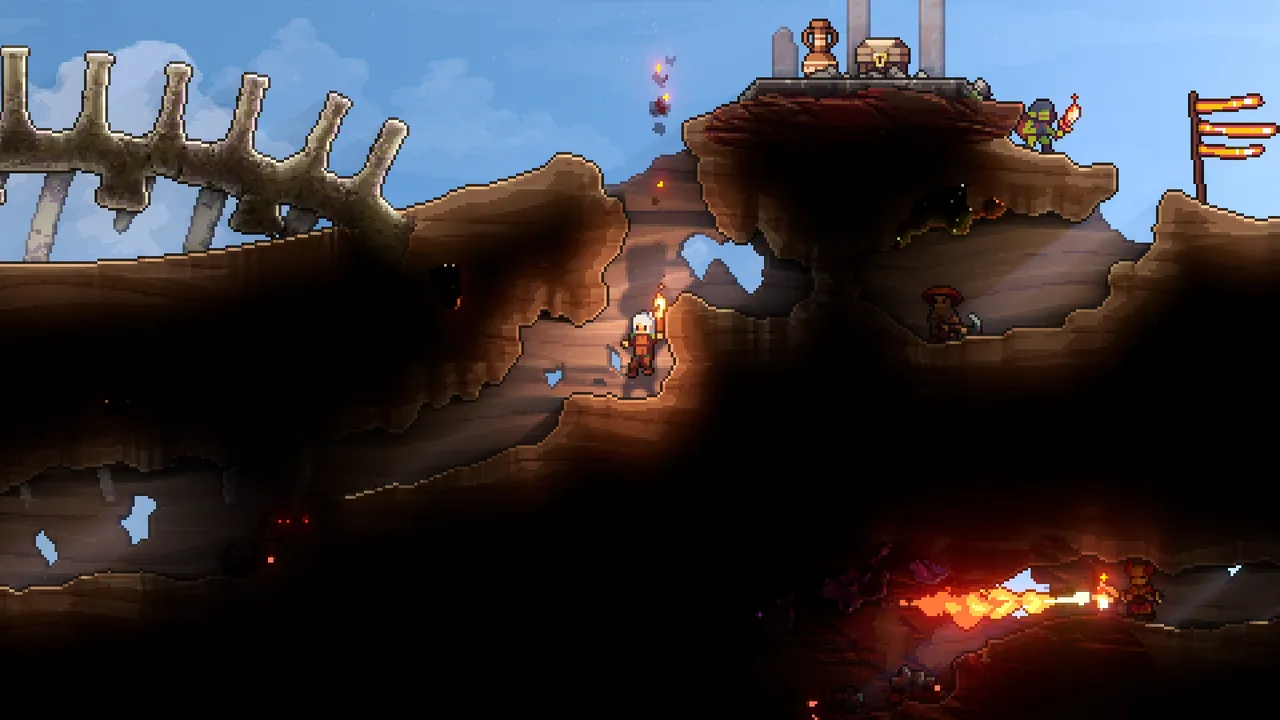
Pugstorm used a skull-shaped cave example to show how an artist-built scene can be converted into a reusable terrain stamp and placed into a generated world.

Authored landmark design

The development post uses Skull Cave to demonstrate recognizable artist-built shapes and alternate approaches within procedural terrain. The surrounding terrain remains destructible.

From scene to terrain stamp

An artist first builds the recognizable cave composition, then converts it into data the procedural generator can place. This preserves deliberate silhouettes and route ideas without fixing the entire world around them, allowing the generated terrain and player-made excavation to remain flexible.

Related records

Official sources

Microdungeons

Small authored scenes and challenges can be inserted into procedural terrain to create recognizable discoveries and alternate routes.

All details, sources, and relationships
Scale
Small authored encounter spaces
Placement
Within procedural worlds
Player tools
Can be altered through destructible terrain

Authored structures in generated worlds

Pugstorm describes microdungeons as hand-authored structures that are placed within procedural terrain to create recognizable exploration moments and challenges.

Multiple approaches

The environment-design post shows destructible spaces with routes created through digging, building, platforming, tools, and hazards rather than one fixed corridor.

Memorable encounters without a fixed map

Microdungeons give artists control over a compact challenge while leaving the surrounding world procedural. Because the terrain is destructible, a placed encounter can still support excavation, construction, platforming, environmental hazards, and alternate entrances instead of reducing every discovery to the same corridor or solution.

Related records

Official sources

Floating Islands and Airspace

Floating landforms and open air create a vertical exploration layer for gliding, launches, wind, creatures, and route planning.

All details, sources, and relationships
Environment
Floating islands and open air
Travel
Gliding and launch experiments

Vertical world

Official imagery shows floating terrain above large open spaces. The 2026 movement blog says airspace should become a meaningful progression area rather than an empty gap between platforms.

Ways to move

Experimental ideas include a physics-based glider, Gust Beetle clouds, throwable Slingshrooms, ropes, tunnels, checkpoints, and teleportation.

Airspace as progression

Pugstorm is experimenting with multiple ways to gain height, preserve momentum, cross open gaps, and establish return routes. Gliding, rising gusts, charged launches, ropes, tunnels, checkpoints, and teleportation give vertical terrain several possible solutions rather than treating floating islands as isolated decoration.

Related records

Official sources

Search release information, systems, places, items, and creatures.