Gameplay Systems

Terraforming, progression, crafting, equipment, building, movement, farming, and survival.

Pixel Terraforming

Mine, shape, carry, rebuild, and destroy terrain at pixel scale to create routes, bases, defenses, and combat advantages.

All details, sources, and relationships
Scale
Individual pixels
Uses
Mining, building, traversal, combat
Available
From the start, per development plans

How it works

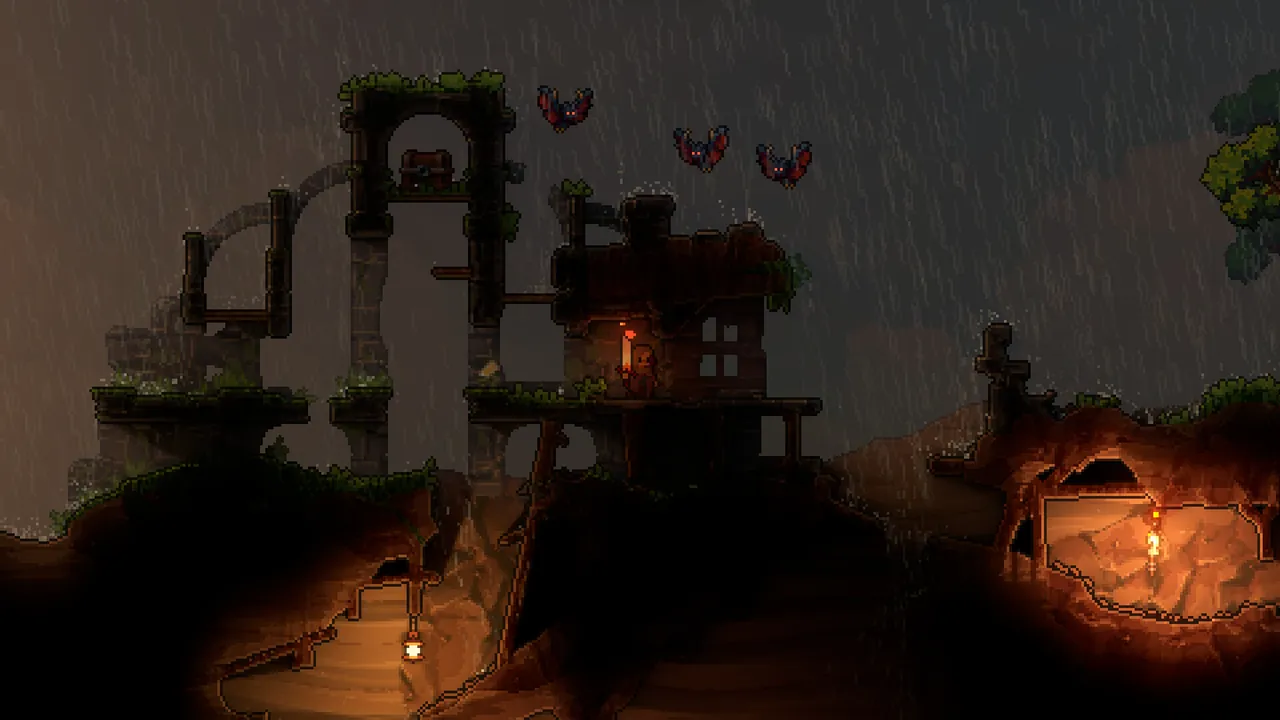
KYORA's terrain is made from individual pixels rather than fixed square blocks. Official material shows players cutting precise paths, collecting terrain material, placing it elsewhere, carving caves, building bridges, and reshaping battle spaces.

Uses

Pugstorm describes making platforms, cover, bases, routes, bridges, and defensive shapes. The system is also tied to physics, so removing support or redirecting material can change how the world behaves.

Terrain as a shared material

Mining transfers material instead of simply deleting it. Pugstorm's first development blog shows pixels being gathered, carried, and rebuilt somewhere else, connecting excavation directly to construction. In multiplayer, those player-made edits are among the essential world changes compressed and synchronized between clients.
Related records

Official sources

Procedural World Generation

KYORA generates terrain, caves, greenery, resources, creatures, and points of interest while using authored scenes to shape pacing.

All details, sources, and relationships
World
Procedurally generated
Generated layers
Terrain, caves, greenery, resources, creatures, POIs
World size
Large; finite or infinite not announced

Generated content

Pugstorm's world-generation work covers the broad terrain shape, underground caves, plants, resources, creature placement, and points of interest. The goal is not pure randomness: authored scenes and challenges help create recognizable moments.

Pacing goals

The team describes a rhythm of Ambience, Adventure, and Action. Quiet landscape, exploration, platforming, discoveries, hazards, and fights are arranged so a world does not feel uniformly busy or empty.

Authored scenes inside generated terrain

Pugstorm combines procedural layers with hand-built structures rather than relying on unrestricted randomness. Artists can turn a scene such as Skull Cave into a reusable terrain stamp, while smaller microdungeons and points of interest create distinct discoveries inside a world whose surrounding terrain remains editable.

Related records

Official sources

Crafting

Gather biome resources, open crafting modules, and make gear, tools, building pieces, food, weapons, and armour.

All details, sources, and relationships
Early resources
Trees and rocks are cited examples
Outputs
Gear, building, food, tools

Crafting loop

Players begin with very little and can shape terrain from the start. Early exploration and gathering provide resources that open more crafting possibilities, which in turn enable better preparation, deeper travel, bases, and boss attempts.

Crafted gear and found loot

The planned balance gives crafted gear predictable player control while loot adds variety tied to enemies and biomes. Weapons and armour can be crafted, found in chests or dungeons, and upgraded with resources.

Crafting across the survival loop

Official posts connect crafting to more than tools and weapons. Gathered terrain and biome resources feed building, equipment, armour upgrades, food, light sources, and preparation for Herald encounters. Progressive crafting modules are intended to broaden those options as exploration continues.

Related records

Official sources

Crafting Modules

Progressively unlocked crafting modules are planned to expand what players can build and make as they explore.

All details, sources, and relationships
Unlock style
Progressive
Purpose
Expand crafting options

Role in progression

The development team describes crafting modules that unlock progressively, adding more crafting options over time instead of exposing every recipe immediately.

Connection to exploration

Crafting modules appear in Pugstorm's description of a loop that begins with sparse equipment, early gathering, and freely shaped terrain. As players explore and collect more useful resources, modules are intended to open more recipes and building options.

Connection to preparation

The same development post links crafting with weapons, armour, building, ingredients, meals, and boss attempts. In that loop, modules connect exploration with the tools, structures, equipment, and food used for travel and Herald progression.

Related records

Official sources

Loot and Equipment

Weapons, armour, resources, and other gear can come from crafting, enemies, chests, dungeons, and biome exploration.

All details, sources, and relationships
Sources
Crafting, enemies, chests, dungeons
Loot identity
Can reflect enemy or biome

Two acquisition paths

Pugstorm describes crafting as the controlled route to gear choices while loot provides surprise and variety. Armour is shown as something found in chests and dungeons or created and upgraded with gathered resources.

Biome-linked rewards

The team says loot can reflect the enemy or biome that produced it.

Why crafting and loot coexist

Crafting gives players a deliberate route toward a chosen item, while enemy drops, chests, and dungeon finds introduce discovery. Pugstorm presents both routes as preparation for harder exploration and bosses, with biome identity influencing what players can encounter and equip.

Related records

Official sources

Armour Stats and Loadouts

Pugstorm links armour with movement speed, maximum health, resistances, defence, sets, and biome-specific loadouts.

All details, sources, and relationships
Shown attributes
Movement speed, max health, resistances, defence
Acquisition
Craft, upgrade, chests, dungeons

Armour attributes

Official character-design work connects armour to movement speed, maximum health, resistances, and defence. Pugstorm describes armour as part of preparing a character for different challenges.

Equipment slots and sets

The work-in-progress interface shows many equipment slots.

Loadouts for different challenges

Pugstorm frames equipment as a set of choices rather than a single linear upgrade. Armour can be crafted and upgraded with gathered resources or discovered in chests and dungeons, while the cited attributes allow a loadout to emphasize movement, health, defence, or resistance for a particular biome or encounter.

Related records

Official sources

Character Customization

Pugstorm is developing a redesigned player character with selectable hair, facial hair, eyes, equipment, and other appearance options.

All details, sources, and relationships
Shown options
Hair, facial hair, eye color
Equipment visibility
Shown in development art

Appearance work

The character redesign explores different hairstyles, facial hair, eye colors, and equipment silhouettes. The goal is to support player identity while keeping animation readable in a detailed pixel world.

Equipment and appearance

Armour and a side-worn lantern appear directly on the character in official development material. Gear affects a loadout and remains visible on the character.

Readability in motion

The redesign had to work at KYORA's small in-game scale as well as in close-up art. Pugstorm discusses clear silhouettes, readable animation, and visible equipment while retaining the hair, facial-hair, eye, and gear variations that help players distinguish their characters in a shared world.

Related records

Official sources

Day and Night Cycle

Daytime is intended for safer onboarding and exploration, while night introduces greater danger, enemies, and pressure to prepare or defend.

All details, sources, and relationships
Day
Safer exploration and onboarding
Night
More dangerous

Daytime role

Pugstorm describes the day as a safer period for learning, gathering, exploring, and making plans before the world applies more pressure.

Nighttime role

Night is planned to introduce more dangerous enemies and hazards. The official post links this rhythm to preparation through equipment, food, light, and shelter.

Preparation connects the cycle

The day and night rhythm ties several survival systems together. Daylight creates room to gather materials, shape terrain, improve a base, cook, and choose equipment; darkness then gives placed torches, wearable light, shelter, food, and combat preparation a more immediate purpose.

Related records

Official sources

Boss Progression

KYORA is planned as a sandbox boss rush where exploration, crafting, meals, bases, and gear preparation lead toward biome Heralds.

All details, sources, and relationships
Structure
Sandbox boss rush
Biome bosses
Heralds
Story
Gentle story and overarching goal

Progression philosophy

Players are meant to explore and experiment rather than follow a rigid checklist. A gentle story and overarching goal provide direction, while bosses form major preparation and progression targets.

Preparing for Heralds

Official examples include upgrading weapons and armour, cooking stat-boosting meals, finding biome resources, building a home, and learning terrain manipulation. These activities feed into boss attempts rather than existing as isolated side systems.

Heralds as biome milestones

The reveal describes each biome as being controlled by a powerful Herald. That structure gives local resources, enemies, equipment choices, food, and terrain knowledge a shared destination: players explore a region, prepare through its connected systems, and eventually challenge the boss associated with that part of the world.

Related records

Official sources

Base Building

Players can terraform and construct pixel-scale homes, bridges, platforms, defenses, and functional crafting spaces.

All details, sources, and relationships
Terrain editing
Pixel scale
Shown structures
Homes, bridges, rooms, doors
Creative tools
Planned in some form for Early Access

Build with terrain

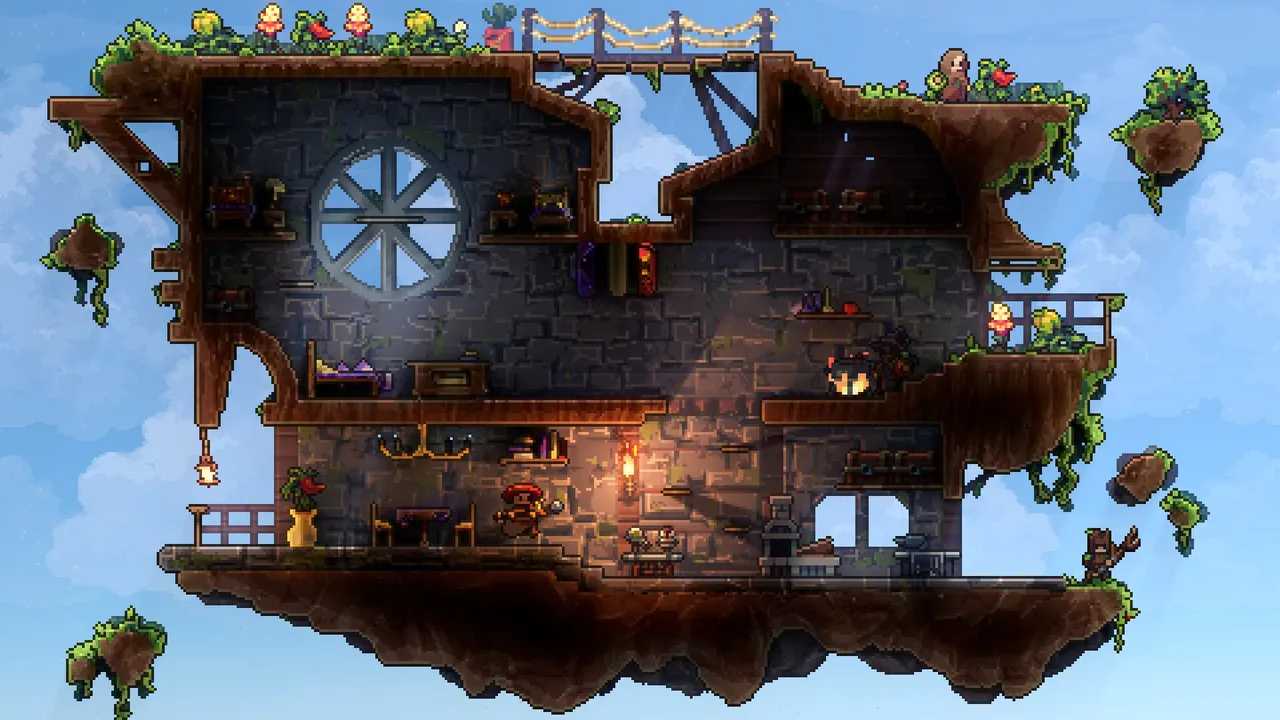
Because the landscape itself is material, official footage combines mined pixels, crafted pieces, carved rooms, bridges, and shaped defenses. Screenshots and trailers also show decorated interiors.

Building parts

Official media shows light sources, storage-like objects, furniture, crafting objects, doors, walls, and terrain construction inside player-built spaces. Exact storage, housing, ownership, and raid rules remain unknown.

From environment tools to player building

Pugstorm's artists use destructible terrain, reusable stamps, crafted surfaces, and authored objects to make spaces with several possible routes. The environment-design blog says versions of those building toolsets are intended to reach players during Early Access, extending the same flexible construction language into player-made bases and structures.

Related records

Official sources

Farming and Cooking

Plant seeds, grow food, and cook recipes, including meals intended to improve player statistics before harder encounters.

All details, sources, and relationships
Farming
Plant seeds
Cooking
Recipes and stat-boosting meals

Food in the survival loop

The reveal confirms planting seeds and cooking recipes. A later development blog specifically mentions ingredients and stat-boosting meals as one way to prepare for bosses and exploration.

Farming at a player-built home

Planting gives a base a renewable activity alongside crafting, storage, light, and equipment work. Official material places farming inside the survival loop rather than presenting it as a separate management mode.

Meals as preparation

Development Blog #5 links gathered ingredients and cooked meals directly to harder exploration and boss attempts. Stat-boosting food joins crafted gear, upgraded armour, biome resources, and base preparation as one of the deliberate ways a player can improve readiness before leaving home.

Related records

Official sources

Wand Abilities and Synergies

Matter- and physics-altering wands are planned to interact with terrain, enemies, and one another for creative problem solving.

All details, sources, and relationships
Role
Manipulate matter and physics
Combat
Abilities can be combined

World-shaping magic

Official material describes wands that alter matter and physics, connecting magic directly to the mutable pixel world instead of limiting it to conventional ranged attacks.

Combining abilities

Pugstorm highlights synergies between wand abilities and invites players to combine effects. No individual effects or combinations have been named publicly.

Magic inside a physical world

Because terrain, gravity, support, objects, and momentum are systemic, a wand effect can matter beyond direct damage. Pugstorm's published pitch places wand combinations alongside digging, building, moving material, and physics-driven problem solving, making them part of traversal and environmental interaction as well as combat.

Related records

Official sources

World Manipulation and Physics

Terrain, dynamic objects, gravity, support, movement, and physics-driven tools create multiple ways through traversal, combat, and construction problems.

All details, sources, and relationships
Terrain
Fully destructible
Dynamic play
Gravity, support, objects, momentum
Purpose
Multiple paths and creative solutions

A systemic world

KYORA treats the environment as something players can change rather than a static backdrop. Official material shows terrain removal, material placement, moving objects, gravity, and magical or physical forces altering routes and encounters.

Multiple solutions

The environment-design post describes spaces as playgrounds with multiple approaches, including digging, building, platforming, tools, hazards, and newly created routes.

Designed for player solutions

A wall, gap, cave, or hazard can be approached through excavation, placed material, a constructed route, movement tools, or an interaction with the surrounding physics. Pixel terraforming, Skull Cave's alternate paths, Slingshroom launches, tumble behavior, and wand synergies all follow that rule.

Related records

Official sources

Tumble Mode

Strong physical forces can place a character into an uncontrolled tumble until they recover, turning momentum into both danger and traversal.

All details, sources, and relationships
State
Experimental alpha
Control
Input is limited until recovery
Triggers
Strong forces and movement objects

Controlled and uncontrolled movement

Pugstorm distinguishes normal player-controlled movement from a temporary tumble state. When a force overwhelms control, the character is carried by momentum and cannot respond normally until recovery.

Movement interactions

The movement blog connects tumbling with falls, launches, wind, traps, moving objects, and other physics-driven traversal experiments. It does not publish final damage or recovery rules.

Momentum as risk and route

Tumble Mode gives the same force two possible meanings. A fall, trap, moving object, gust, or Slingshroom can remove control and create danger, while a planned launch can also carry the character across open space. The prototype links traversal and physical hazards through momentum instead of separate scripted states.

Related records

Official sources

Gliding and Airspace

Official alpha work connects vertical progression with gliding, ropes, tunnels, checkpoints, teleportation, wind, creatures, and throwable launch tools.

All details, sources, and relationships
Glider
Experimental
Flight model
Lift, drag, stalls, momentum
Other travel ideas
Ropes, tunnels, checkpoints, teleportation

Physics-based gliding

The experimental glider is designed around lift, angle of attack, induced drag, and aerodynamic stalls. It preserves momentum rather than providing free hovering, so altitude and launch conditions affect the alpha flight model.

Layered vertical travel

Pugstorm wants airspace to become a progression space. The same development post lists Gust Beetle clouds, Slingshrooms, ropes, tunnels, checkpoints, and teleportation as movement experiments or alternatives.

Gliding is not hovering

The alpha model rewards entering the air with useful height and speed, then managing angle of attack to trade momentum for lift. Induced drag and stalls prevent the glider from acting as unlimited flight, while gust clouds and launch tools can create the conditions for longer routes through open air.

Related records

Official sources

Search release information, systems, places, items, and creatures.